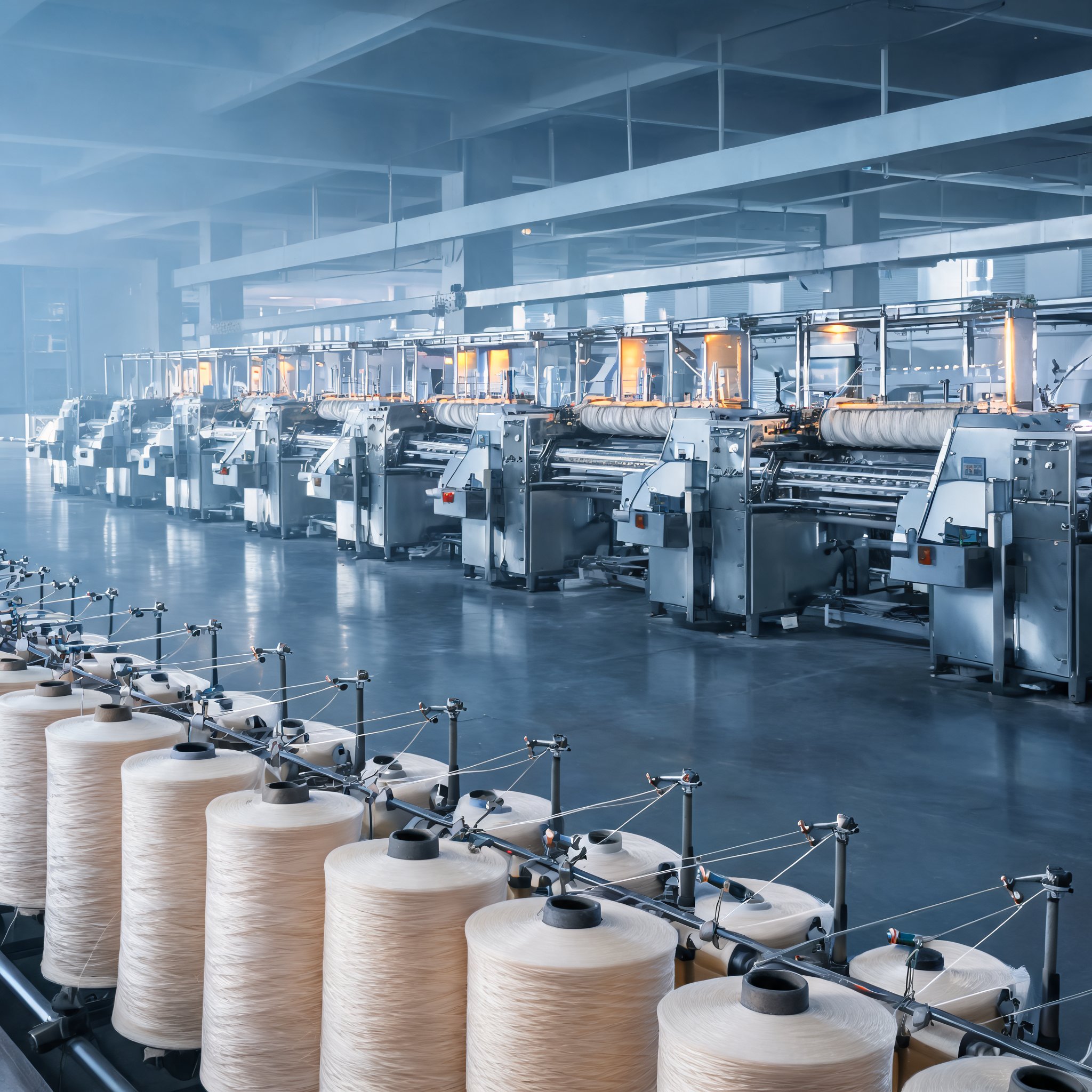
Barmag, a supplier of man-made fiber spinning and texturing systems, is positioning energy efficiency, automation and digitalization at the center of its pitch to Bangladesh’s textile industry, while preparing to show a new generation of machinery at ITMA ASIA + CITME 2026 in Shanghai.
In an interview, André Wissenberg, Vice President and Head of Marketing, Corporate Communications and Public Affairs at Barmag GmbH & Co. KG, said the global textile machinery industry is undergoing significant transformation. Manufacturers face pressure from energy costs, sustainability requirements, labor shortages and the need to stay competitive in dynamic markets. At the same time, demand for high-quality man-made fibers is creating opportunities in advanced polyester and polyamide production, recycled materials, technical textiles and increasingly automated manufacturing.
Barmag’s portfolio covers filament spinning, texturing, BCF systems, staple fiber systems and nonwovens, alongside polycondensation and extrusion systems and key components. The company says it supports the entire manufacturing process from monomer through to textured yarn, with engineering services, automation, digital solutions and high-precision gear metering pumps for textiles and other sectors.
Energy efficiency as a response to Bangladesh’s constraints
Wissenberg said reliable and affordable energy is a major concern for Bangladesh’s textile industry, and that Barmag technologies are designed to reduce specific energy consumption, increase production efficiency and minimize waste.
The eFK EvoSmart texturing machine combines advanced heater technology and intelligent godet control to reduce specific energy consumption by up to 25%, depending on configuration and operating conditions. The new POY 2.0 spinning concept uses a redesigned spinning beam that can reduce energy consumption by up to 10%, while improvements in process control and yarn quality help reduce waste and improve operational performance. Barmag’s atmos.io digital platform provides production data and process transparency so manufacturers can identify inefficiencies and make better-informed decisions.
Wissenberg also set a limit on what machinery can achieve. Energy-efficient equipment cannot compensate for an interrupted gas supply or an unreliable electricity grid, he said. It can, however, help manufacturers use available energy more efficiently, lower energy costs per kilogram of yarn and strengthen competitiveness when production conditions allow.
ITMA ASIA + CITME 2026 showcase
At ITMA ASIA + CITME 2026, Barmag will present filament spinning, texturing, staple fiber, nonwovens and digital production solutions. A key highlight is POY 2.0, which rethinks how spinning, quenching and winding interact. Its centerpiece is the WINGS POY 2.0 winder, featuring a fully automatic string-up function intended to reduce operator intervention, shorten start-up times and minimize waste. The concept also includes a redesigned spinning beam and the EvoQuench 2.0 system.
Other exhibits include the eFK EvoSmart texturing machine, with optimized process control, EvoHeater technology and Smart Godets; WINGS FDY FLEX, a flexible winding concept for a broad range of yarn types and rapid product changes, including recycled polyester; and the atmos.io platform for connected, transparent yarn production. Barmag’s Neumag portfolio adds EvoSteam for staple fiber production, FiberGuard BCF for intelligent monitoring and process control in BCF yarn production, and hycuTEC for advanced nonwoven applications.
The company will exhibit at booth D45 in Hall 6.1 at the National Exhibition and Convention Center in Shanghai from November 20 to 24, 2026.
Bangladesh plans
Wissenberg described Bangladesh as an important textile manufacturing country with a strong export-oriented industry and an established position in global textile and apparel supply chains. Barmag sees opportunities for advanced man-made fiber technologies as manufacturers seek to improve quality, efficiency and competitiveness.
The company says it looks at the entire value chain, from continuous polycondensation, spinning and texturing to final bobbin handling. Its focus includes polyester and polyamide filament yarns, staple fiber and technical textile applications. Barmag acknowledges challenging market conditions, including energy supply uncertainties, cost pressures and investment constraints, and says manufacturers should evaluate new machinery by long-term economic benefits.
To strengthen engagement with Bangladesh’s textile industry, Barmag plans closer customer relationships, technical consultation and cooperation with local partners. The objective, Wissenberg said, is not simply to sell machinery but to build long-term partnerships that help customers achieve sustainable operational improvements. Barmag believes Bangladesh has the industrial expertise, entrepreneurial spirit and international market connections to remain an important player in global textiles, and wants to be a reliable technology partner in that development.