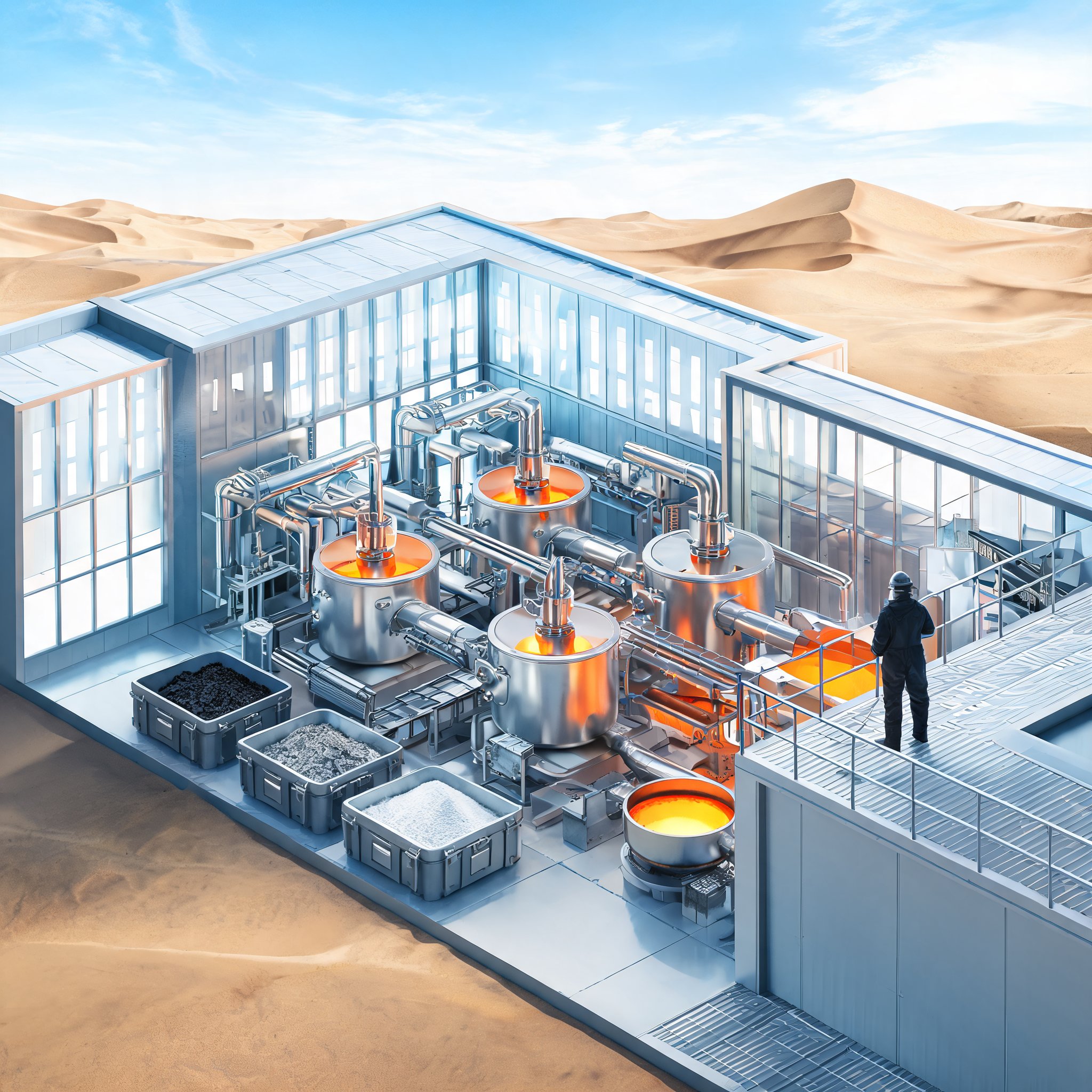
PyroGenesis Inc. has completed the deployment of seven Drosrite aluminium dross recovery systems at a purpose-built plant in Saudi Arabia for Radian Oil and Gas Services Company, fulfilling its original contract. The installation has a combined capacity of up to 45,000 tonnes of aluminium dross per year and includes PyroGenesis’s first two 10,000-tonne-per-year units.
The Montreal-based technology provider announced on October 15, 2026, that the final four systems were installed and operational at the facility. The plant is located within what PyroGenesis describes as the world’s largest vertically integrated aluminium production complex.
Installation and contract details
The completed installation consists of two 5,000-tonne-per-year systems and two 10,000-tonne-per-year systems. PyroGenesis said the larger units are the first of their capacity to be deployed worldwide.
Radian initially contracted PyroGenesis to design, engineer, install and commission seven Drosrite systems for aluminium dross processing. The first three units, each with a capacity of 5,000 tonnes per year, entered full commercial operation in April 2022 at a temporary facility while the new plant was being engineered and constructed. Those three systems have since been moved to the purpose-built facility alongside the four newly operational units, bringing total annual processing capacity to 45,000 tonnes of aluminium dross.
The completion marks the fulfilment of the original seven-system contract. PyroGenesis said additional dross processing requirements could emerge as the wider aluminium complex continues to expand.
Drosrite targets metal recovery from aluminium waste
Aluminium dross is generated when oxygen comes into contact with molten aluminium and solid impurities rise to the surface, where they are skimmed off. According to PyroGenesis, the material can contain up to 80 per cent metallic aluminium mixed with oxides, salts, fluxing agents and other contaminants. The company estimates that smelters can lose between 2 and 10 per cent of their annual aluminium melt production through dross.
Traditionally, the material has been landfilled or reprocessed using salt or chemicals, although appropriate treatment can recover valuable metal and other materials for reuse. PyroGenesis says its patented Drosrite technology can recover up to 98 per cent of the aluminium contained in dross, with lower operating costs and energy consumption than some conventional processes. The salt-free method is also designed to avoid generating hazardous salt cakes that require disposal, allowing dross to be processed on-site.
President and CEO P. Peter Pascali said growing aluminium demand was increasing the need to manage production by-products effectively. He added that poorly processed or landfilled dross represents both a loss of recoverable material and an environmental challenge for the industry.
Rising aluminium output increases dross management needs
The deployment comes amid growth in global aluminium consumption and production. Industry figures included in the announcement put total aluminium usage, including primary and recycled metal, at 100.8 million tonnes in 2024, up from 82 million tonnes in 2016. Smelter output rose from 59.9 million tonnes to 72.9 million tonnes over the same period.
The announcement also cites estimates that aluminium dross generation could grow by 3 to 4 per cent annually. Approximately 4.78 million tonnes of dross was generated in 2024, while some estimates put annual generation as high as 8 million tonnes when smaller facilities and downstream operations are included. An estimated 30 to 40 per cent of dross, particularly from the secondary aluminium sector, continues to be landfilled. These figures underline the potential role of recovery technologies in reducing metal losses and managing waste as aluminium production expands.