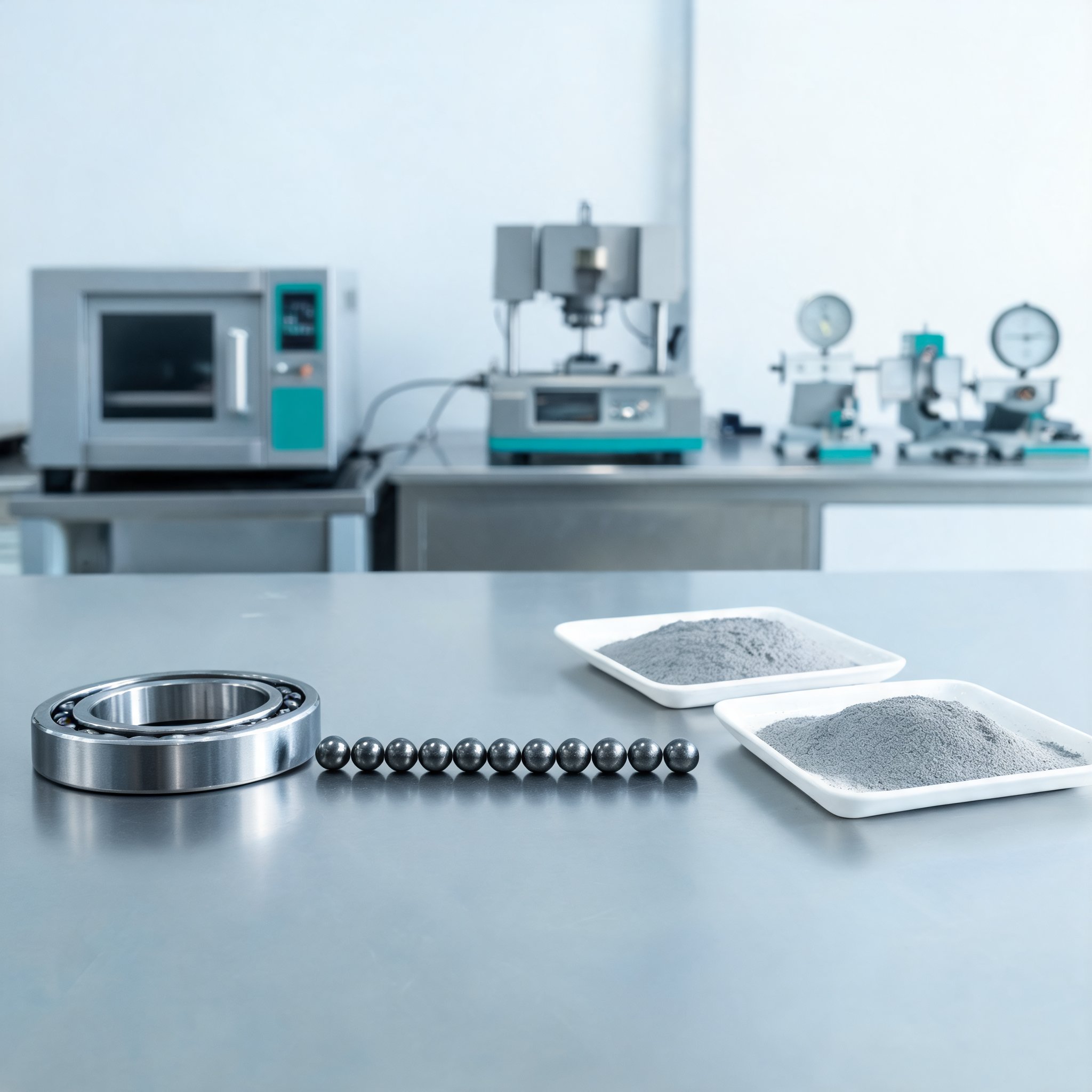
SKF has opened a new Ceramic Process Laboratory, known as the C-Pro Lab, at its research and development center in Houten, the Netherlands. The facility gives the Swedish bearing group in-house capability stretching from raw material powder processing through to the engineering of high-performance components, a span the company says reinforces its technology leadership along the complete ceramic manufacturing value chain and supports wider global adoption of advanced hybrid bearing technology.
The announcement frames ceramic capability as central to SKF's technology leadership rather than a niche specialty, tying the laboratory to the company's position across the full manufacturing chain.
Demand for hybrid ceramic bearings is accelerating as industries move toward electrification and higher energy efficiency. The design combines high-grade steel rings with silicon nitride rolling elements, and SKF says it delivers better electrical insulation, lower weight and reduced friction than traditional all-steel alternatives.
Faster development, faster commercialization
Annika Ölme, SKF's chief technology officer and senior vice president for technology development, said ceramic and hybrid bearing technologies are essential enablers for clean and reliable rotation in next-generation industrial electrical applications. She said the C-Pro Lab gives the company mastery over the ceramic process from end to end, which should allow it to innovate faster, optimize material performance and accelerate the commercialization of high-performance hybrid solutions for customers globally.
A single site for the whole process
The C-Pro Lab is positioned as a global competence center within SKF's research and technology development organization, with a remit to optimize ceramic technology end to end. Powder formulation, compaction, sintering and surface finishing are all carried out at the Houten site, and SKF says researchers can therefore prototype new material compositions quickly, refine microstructures and improve process efficiency for high-volume manufacturing.
The laboratory adds materials work to SKF's bearing portfolio, concentrating on the ceramic side of hybrid designs — the silicon nitride rolling elements that distinguish them from all-steel products. SKF describes the combination of process steps as what allows material performance and production processes to be optimized together.
Where hybrid bearings matter
SKF identifies industrial automation, aerospace and high-speed machinery among the rapidly expanding sectors that rely on ceramic technology. Hybrid bearings help prevent electrical erosion in high-speed electric motors; the company also cites friction reductions of up to 50 percent and reliable operation at extreme temperatures in demanding environments.
The opening brought together customers from the railway, aerospace and drives industries, along with other stakeholders and H.E. Julius Liljeström, Sweden's ambassador to the Netherlands. SKF presented the event as a sign of how closely it collaborates with customers on industrial innovation and sustainable technology.