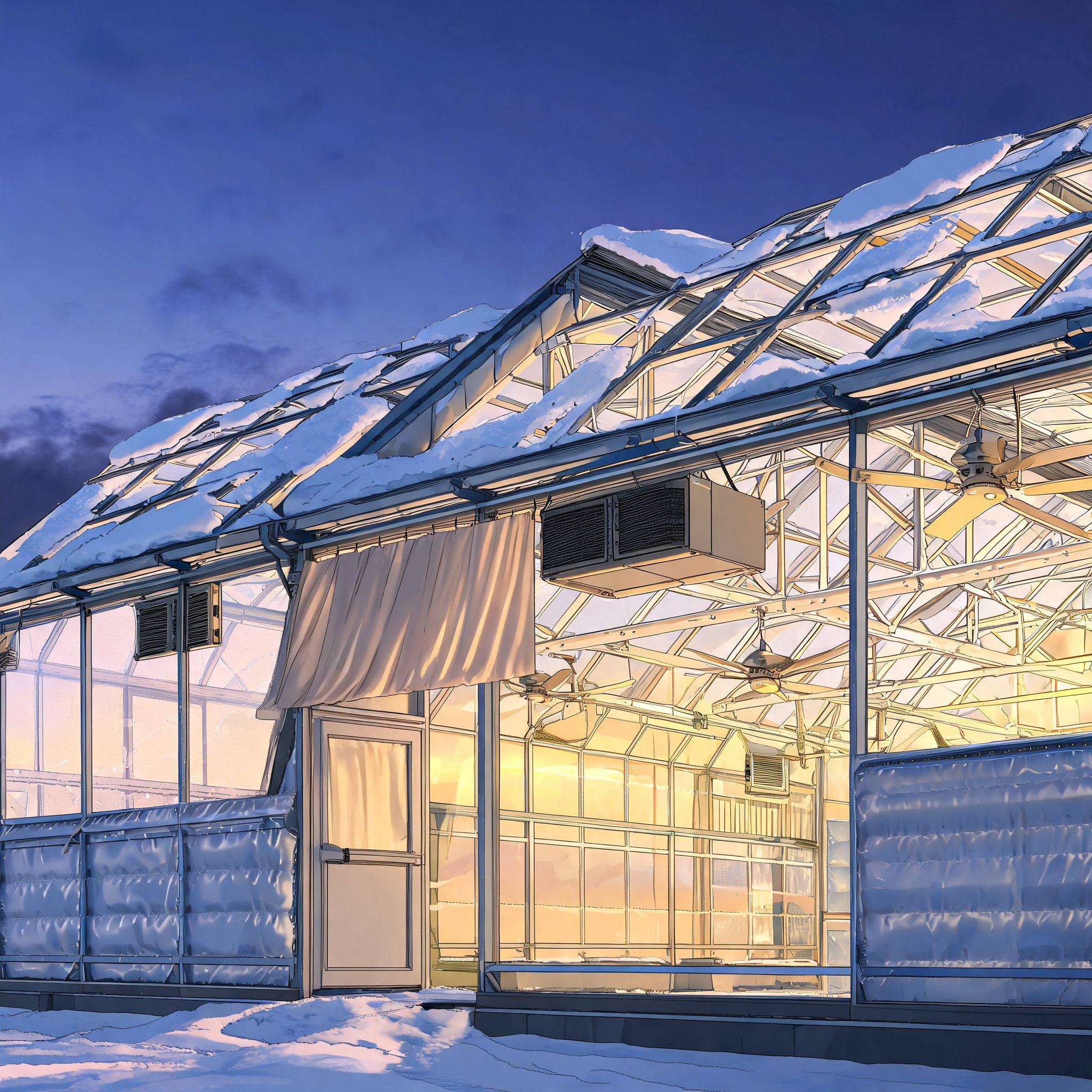
Winter conditions place sustained pressure on every major greenhouse system. Heaters run longer, ventilation settings shift, and snow, ice and temperature swings can reveal structural or equipment weaknesses that were easy to overlook in milder weather. A commercial winterization program should therefore go beyond keeping the crop warm: it should protect production continuity, crop quality, energy performance and the ability of the structure and environmental controls to operate reliably.
Before the coldest weather arrives, the article recommends a full inspection inside and outside the greenhouse. Framing connections, doors, vents, glazing, poly coverings, seals and exterior components should be checked for damage or looseness. Operators should pay close attention to places where air or moisture can enter. Worn weather stripping, aging seals, loose panels and gaps around doors or vents can increase heat loss and complicate environmental control. Poly-covered houses should be inspected for punctures, tears, looseness and deterioration, and inflated double-poly systems should be checked to confirm that inflation is working properly.
Confirm structural and snow-load assumptions
Snow and wind requirements vary by location and greenhouse design. Operators should confirm that structural components are maintained in line with the building’s intended design and local requirements. If structural condition or winter loading is a concern, the article advises involving the greenhouse manufacturer or a qualified professional before a major storm, rather than waiting for a problem to develop.
Service the heating system before demand peaks
A heating fault in July may be inconvenient; the same fault during a January cold snap can become an operational emergency. The checklist calls for inspection of the complete heating system and completion of manufacturer-recommended service. Boilers, unit heaters, radiant systems, pumps, fans, thermostats, sensors and distribution equipment should all operate as intended. Growers should also test circulation and horizontal airflow fans, confirm that vents and louvers open and close correctly, inspect controls, alarms and backup systems, check fuel supplies or delivery arrangements where applicable, and review generator or emergency-power procedures.
Environmental controls need particular attention because winter management is rarely only about heating. Humidity, airflow, ventilation and temperature interact. Reducing ventilation too aggressively to conserve heat can lead to humidity problems, condensation and uneven growing conditions. The objective is to maintain the conditions the crop requires while operating the greenhouse as efficiently as practical.
Find heat losses and prepare for severe weather
Heating is often one of the largest winter operating demands in a commercial greenhouse, so small efficiency problems are worth finding early. The building envelope should be inspected for escaping conditioned air. Doors that do not close properly, worn seals, gaps around penetrations, damaged glazing and poorly maintained vents can all make heating systems work harder. Retractable energy curtains or thermal screens should be checked for the condition of the material, drive system, cables, motors, sensors and controls before nightly use begins. Where appropriate to the design and operation, some growers add inflated polyethylene over polycarbonate or glass sidewalls and gable ends for seasonal insulation without permanently changing the existing glazing.
Equipment and storage areas should not interfere with airflow or heat distribution. A heating system can be operating correctly yet produce inconsistent temperatures if benches, stored materials, equipment or temporary barriers disrupt air movement. The article also suggests reviewing whether the greenhouse is still operated as originally designed, since production layouts, crops, benches and structures change over time and environmental equipment may need adjustment.
Assign storm responsibilities and manage snow safely
A winter plan should define who monitors snow accumulation, heating equipment, alarms, backup power, vents and other critical systems during storms or extreme cold. Gutters, drainage paths and areas around the greenhouse should be kept clear where practical so melting snow and ice can drain, and doors and emergency exits should remain accessible.
In snow-prone climates, dedicated gutter snow-melt piping installed beneath the gutters can operate as a separate heating zone and be activated when snow or ice is present on the roof or in the gutters. By supplying heat where melting is needed, the article notes, growers may be able to keep energy curtains or blackout systems closed instead of opening them to let greenhouse heat reach the roof and gutters. Snow removal should always follow recommendations for the specific greenhouse design; improper removal can damage coverings or structural components, and unnecessary personnel activity on or around a snow-loaded greenhouse can create safety risks.